Getting a Subclass 500 student visa refused is expensive, stressful, and avoidable in most cases. Every year, thousands of Bangladeshi applicants lose their visa fee, their intake, and sometimes their confidence, because of small mistakes that a case officer can spot in minutes.
This guide breaks down the real reasons Australian student visas get rejected, what has changed for Bangladeshi applicants in 2026, and the practical fixes that actually work.

Why Rejections Are Rising for Bangladeshi Applicants
On 8 January 2026, Australia’s Department of Home Affairs moved Bangladesh from Evidence Level 1 to Evidence Level 3, the highest risk category under the Simplified Student Visa Framework. India, Nepal, and Bhutan were reclassified at the same time, citing “emerging integrity issues” in student visa applications from these countries, according to The Daily Star.
This change means Bangladeshi applicants now face closer checks on bank statements, academic transcripts, and English test scores. Case officers can call institutions and referees directly to confirm documents before deciding.
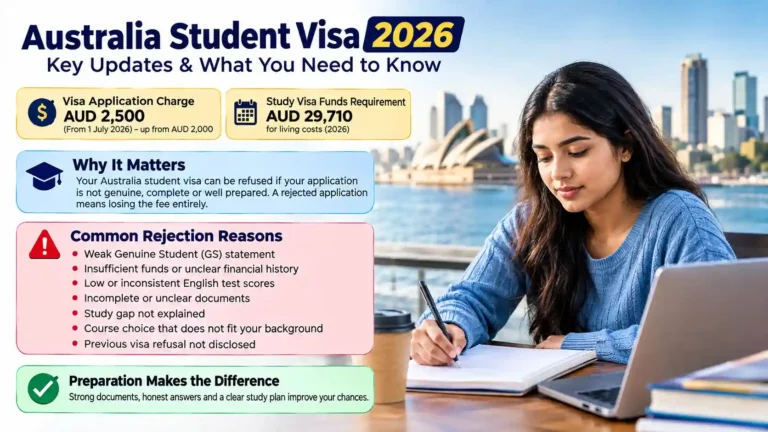
On top of this, the Subclass 500 visa application charge rose to AUD 2,500 for applications lodged from 1 July 2026, up from AUD 2,000 the year before. A rejected application means losing this fee entirely, since it is non-refundable.
None of this means genuine students cannot get approved. It means preparation matters more than ever.
Quick Overview: Common Rejection Reasons
| Rejection Reason | What Case Officers Look For |
| Weak Genuine Student (GS) statement | Vague goals, no link between course and career |
| Insufficient funds | Funds below AUD 29,710 living cost requirement |
| Sudden large deposits | Money with no clear source or history |
| Low or inconsistent English scores | Scores that do not match course entry requirements |
| Missing or unclear documents | Incomplete forms, unsigned OSHC, uncertified transcripts |
| Study gap not explained | Long breaks in education without reason |
| Mismatched course choice | Course does not fit past study or career plan |
| Previous visa refusal | Past rejections not disclosed or explained |
1. A Weak Genuine Student (GS) Statement
Since 23 March 2024, the old Genuine Temporary Entrant test was replaced with the Genuine Student requirement. This is now the single biggest reason for refusal.
A weak GS statement usually sounds generic. Phrases like “I want a good education” or “Australia has a better lifestyle” do not tell a case officer anything specific. The Department wants to see a clear line between your current studies, the course you are applying for, and your career plan back in Bangladesh.
| How to fix it: Write your GS statement around three points. Why this course, why this provider over others in Bangladesh or elsewhere, and what job or business you plan to pursue with this qualification. Use real examples from your academic and work background rather than general statements. |
2. Insufficient or Inconsistent Financial Evidence
For 2026, a single applicant must show access to at least AUD 29,710 for living costs, on top of tuition and travel. Additional amounts apply for a spouse or children travelling with you.
Under Evidence Level 3, Bangladeshi applicants can expect manual verification of bank statements. A large deposit that appears just before lodgement, without a clear source such as salary, property sale, or an approved loan, is one of the fastest ways to get flagged.
| How to fix it: Build your savings history over at least three to six months. Keep salary slips, business income records, or loan sanction letters ready. If a relative is sponsoring you, include a clear letter explaining the relationship and the source of their funds. |
3. Low or Inconsistent English Test Scores
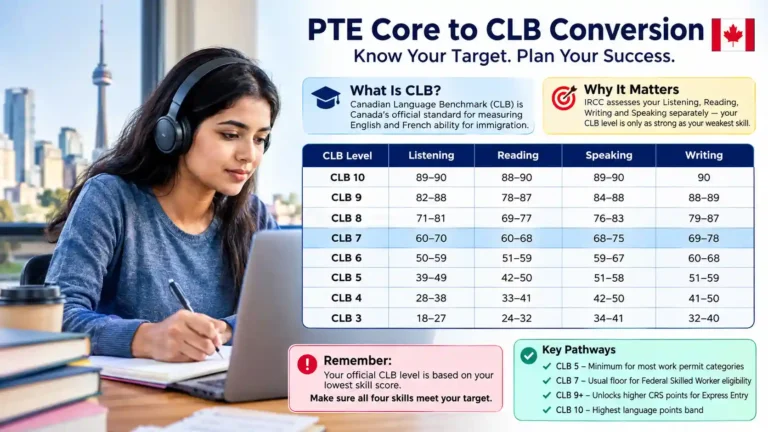
Most Subclass 500 courses require an IELTS score of around 6.0 to 6.5 overall, though this varies by course and provider. PTE Academic scores are accepted too, but they are checked closely for authenticity under Evidence Level 3.
A mismatch between your English score and your course level, or between different English tests taken close together, raises questions. A sudden jump in score without an explanation, such as extra coaching, can look inconsistent to a case officer.
| How to fix it: Take one test seriously rather than sitting several tests hoping for a lucky result. Structured coaching with mock tests under real exam conditions, such as our PTE Standard Course, helps you build a genuine, repeatable score instead of one that looks unusual on paper. |
4. Incomplete or Inconsistent Documents
This is the simplest reason for rejection and one of the most common. Missing a signed OSHC policy, an uncertified transcript, or leaving a mandatory field blank can delay or refuse an otherwise strong application.
Under Public Interest Criterion (PIC) 4020, providing false, misleading, or inconsistent information, even by accident, can lead to refusal and a possible three-year exclusion from applying again.
| How to fix it: Use the Department’s official Document Checklist Tool on the Home Affairs student visa page before you lodge. Check that names, dates, and figures match exactly across your passport, academic records, and bank documents. |
5. Study Gaps That Are Not Explained
A gap of a year or more between finishing your last qualification and applying for the visa is not automatically a problem. What causes rejection is leaving it unexplained.
| How to fix it: If you worked, prepared for English tests, or managed a family business during the gap, say so clearly in your GS statement and back it up with evidence such as employment letters or business documents. |
6. Choosing a Course That Does Not Fit Your Background
Applying for a Master’s in a field completely unrelated to your Bachelor’s degree, without a clear reason, can weaken your GS case. Case officers look for a logical academic and career pathway.
| How to fix it: If you are changing fields, explain why in your statement. A relevant short course, certification, or work experience in the new field strengthens your case significantly. |
7. Previous Visa Refusals or Immigration History
A past visa refusal, from Australia or another country, does not automatically block a new application. Not disclosing it does. The Department cross-checks immigration history, and non-disclosure is treated as misleading information under PIC 4020.
| How to fix it: Always declare previous refusals honestly and explain what has changed since then, whether that is stronger finances, a clearer study plan, or a more relevant course choice. |
8. Health and Character Requirements
All applicants must meet basic health and character standards. This includes a medical examination for most applicants and, in some cases, police clearance certificates.
| How to fix it: Book your medical examination early with an approved panel physician and keep police clearance certificates current, since some have a limited validity period. |
How to Strengthen Your Application Before Lodging
- Start your English test preparation early, so your score reflects your real ability rather than a rushed result.
- Save consistently for at least three to six months rather than depositing a lump sum right before applying.
- Get your GS statement reviewed by someone who understands what case officers actually check.
- Keep every document translated and certified where required, and double check names and dates match across all files.
- Confirm your course and provider details directly with the institution before lodging.
Why Your English Score Matters More Under Evidence Level 3
With Bangladesh now under stricter scrutiny, a clean, well-prepared PTE Academic score does more than meet the minimum requirement. It supports your Genuine Student case by showing consistent, genuine preparation rather than a one-off result.
Frequently Asked Questions
What is the current financial requirement for an Australia student visa in 2026?
A single applicant needs to show access to at least AUD 29,710 for living costs for 2026, on top of tuition fees and travel costs. Additional amounts apply if a spouse or children are included in the application.
How much does the Australia student visa cost now?
From 1 July 2026, the Subclass 500 application charge is AUD 2,500 for the primary applicant. Concession rates apply to some ELICOS and ASEAN applicants, but most Bangladeshi applicants pay the standard rate.
Why was Bangladesh moved to Evidence Level 3?
On 8 January 2026, Australia’s Department of Home Affairs reclassified Bangladesh, along with India, Nepal, and Bhutan, from Evidence Level 2 to Evidence Level 3, citing integrity concerns in student visa applications from these countries.
Can I reapply after a visa refusal?
Yes, in most cases. If your visa was refused offshore, you can lodge a new application after addressing the reasons for refusal. Refusals under PIC 4020 for false or misleading information can carry a three-year exclusion period, so always disclose accurately the first time.
Does a higher PTE or IELTS score guarantee visa approval?
No single factor guarantees approval. A strong English score is one part of a complete application that also needs a genuine study plan, sufficient funds, and consistent documentation.
Is Bangladesh’s Evidence Level 3 status permanent?
Evidence Levels are reviewed periodically by the Department of Home Affairs and are not fixed. Bangladesh was previously rated Level 1 in late 2025 before this change, so future reviews could adjust the rating again. Always check current requirements before applying.